The Fake Delivery Message Scam: How It Works and Why It Keeps Working

If you live in India and use online shopping or food delivery apps, chances are you have seen a message like this: “Your parcel is on hold. Please confirm your address using the link below.” The message looks routine, harmless, and urgent. That is exactly why this scam keeps working.

The first reason is timing. Indians receive a huge number of legitimate delivery updates every week from e commerce platforms, courier companies, and hyperlocal services. Scammers take advantage of this habit. When a message arrives saying there is an issue with a package, most people assume it is related to something they recently ordered and click without thinking twice.

The second trick is imitation. Scam messages often copy the tone, language, and branding style of real courier services. Some even use sender names that resemble logistics companies. Once the victim clicks the link, they are taken to a fake website that asks for personal details, mobile numbers, or small “re delivery fees.” That is enough to capture card details or trigger UPI fraud.

A common real life example seen across Indian cities is the fake India Post or courier reschedule link. Users report being asked to pay as little as twenty or thirty rupees. The amount feels insignificant, so people proceed. Behind the scenes, the page is harvesting card data or setting up future fraud attempts.

Another reason this scam works is data availability. Scammers already have access to leaked phone numbers and shopping behavior from previous breaches. That allows them to target people who are more likely to be expecting deliveries, making the messages feel personal and believable.

Finally, urgency does the psychological heavy lifting. Messages warn that parcels will be returned or orders cancelled within hours. Urgency shuts down rational thinking and pushes quick action.

This scam is not about technology alone. It is about manipulating everyday habits. For businesses, it highlights the need for stronger customer communication controls and better protection of user data. For individuals, it is a reminder that real delivery companies do not ask for payments or sensitive details through random links. In cybersecurity, the weakest link is rarely the system. It is human attention, stretched thin by convenience and speed.

Why You’re Getting Scam Calls Even Though You Never Shared Your Number

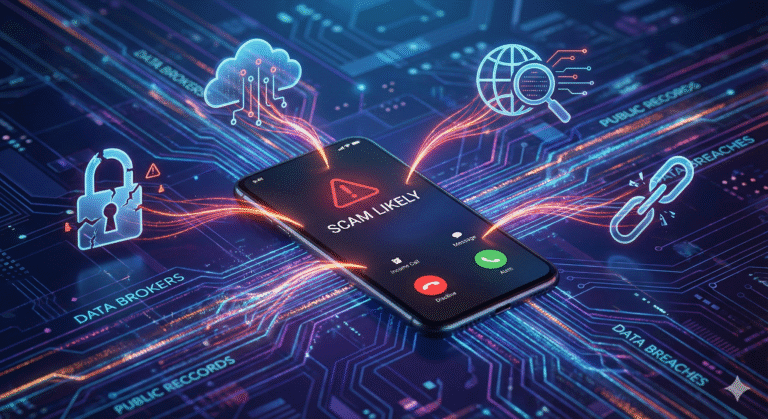
If you live in India, scam calls have probably become a routine annoyance. Calls claiming to be from banks, UPI support, insurance providers, or even government departments often arrive out of nowhere. What makes this alarming is that many people are confident they never shared their phone number publicly. Yet, the calls keep coming.

The most common reason is data leakage. Almost every digital service in India asks for a phone number, whether it is food delivery apps, online shopping platforms, job portals, coaching institutes, or local service apps. When these platforms fail to secure their databases properly, phone numbers get exposed. Once leaked, this data is copied, resold, and reused endlessly.

Another major factor is indirect data sharing. Many apps and websites share user data with third-party advertisers and partners under vague privacy policies. A simple action like signing up for a free trial, registering for a webinar, or scanning a QR code at a store can put your number into multiple databases without you realizing it.

A real-life example seen across India is job-related scam calls. In recent years, users who registered on small job portals started receiving fake HR calls offering work-from-home roles. The callers sounded professional and knew basic details, which made the scam convincing. Victims later discovered their numbers were sourced from compromised job databases.

Telecom number recycling also plays a role. When a number is reassigned, scammers may already have it listed from the previous owner.

Scam calls are not random accidents. They are the outcome of weak data protection, poor cybersecurity practices, and uncontrolled data sharing. For Indian businesses, this is a serious reminder that protecting user data is no longer optional. Once personal data leaks, trust is lost, and damage is permanent.

One of the biggest reasons is data breaches. Indian users’ phone numbers often get exposed when apps, websites, or service providers suffer security lapses. Food delivery apps, e-commerce platforms, EdTech portals, and even small local service apps collect phone numbers. When their databases are compromised or poorly secured, this data ends up for sale on underground forums.

Another common source is data sharing without consent. Many apps bundle user data with third-party advertisers or “analytics partners.” Even if you never posted your number online, signing up for a discount, Wi-Fi access, or a contest may quietly pass your details along.

A real-life example: in 2023, several Indian users reported scam calls shortly after registering on lesser known job portals. The pattern was clear fake HR calls offering high-paying roles, followed by demands for “registration fees.” The victims had only shared their number once.

Then there’s number recycling. Telecom operators reassign old numbers. If the previous owner shared it widely, scammers already have it on their lists.

Finally, automated dialers simply brute-force Indian number ranges, especially active series like +91 9XXXXXXXXX.

Scam calls aren’t random. They’re a symptom of weak data protection practices. For businesses, this highlights the urgent need for stronger cybersecurity controls, responsible data handling, and compliance with India’s DPDP Act because once data leaks, control is lost forever.