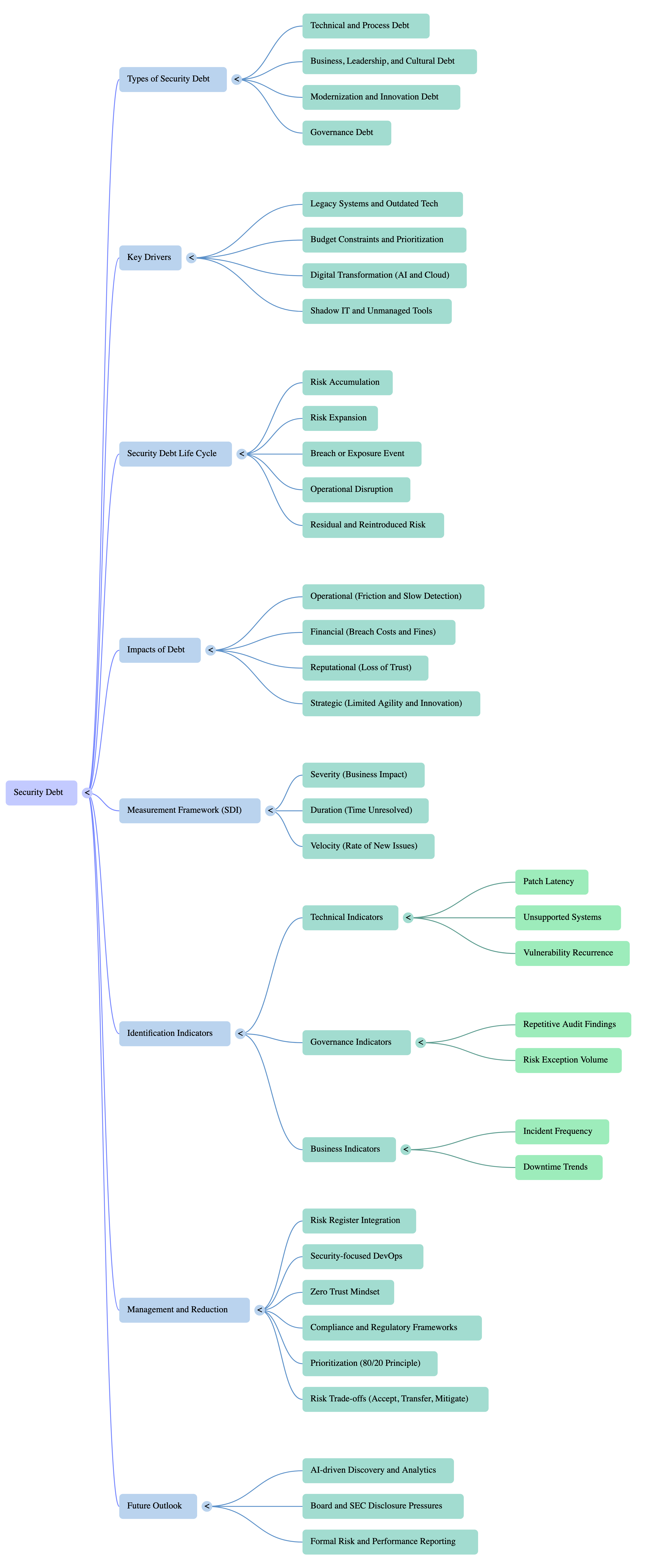
Security debt operates similarly to technical debt, but with a critical distinction: while technical debt primarily affects system efficiency, security debt directly increases an organization’s exposure to threats, compliance failures, and the erosion of trust. It builds up gradually through seemingly harmless decisions meant to save time, stretch budgets, or accelerate delivery.
Here is a detailed breakdown of the origins, impacts, and management strategies for security debt:
The Origins and Drivers of Security Debt
Security debt is not just a technology problem; it forms across multiple facets of an organization:
- Technical and Process Debt: This accumulates through aging infrastructure, inconsistent patching, and manual processes. A classic example is the 2017 Equifax breach, where a delayed patch for a known vulnerability ultimately led to the exposure of 140 million people’s data and cost the company at least US$575 million.
- Business, Leadership, and Cultural Debt: This debt grows when executives treat cybersecurity as a finite project rather than a shared, continuous responsibility. A culture where teams assume “someone else will handle it” leads to deferred budgets and neglected training.
- Governance Debt: When innovation outpaces oversight, governance debt occurs. A major driver of this is shadow IT—when teams adopt tools and integrations outside of approved channels, creating unmanaged connections and blind spots.
The Compounding Impacts
Unmanaged security debt does not just cause isolated issues; its impacts cascade across the business:
- Operational Strain: Deferred fixes make systems fragile. Every missing control adds friction to daily operations, leading to human fatigue and slower detection times.
- Financial Losses: In 2025, the global average cost of a data breach reached US$4.44 million, driven largely by regulatory fines and escalation costs. Debt also increases insurance premiums and forces teams into costly cycles of repetitive rework.
- Reputational Damage: Breaches stemming from long-ignored, known vulnerabilities heavily damage an organization’s credibility, driving away customers, investors, and sometimes leading to executive turnover.
- Strategic Stagnation: Debt severely limits agility. Leaders find themselves planning around technological constraints and managing crises instead of pursuing new growth initiatives.
The Role of Artificial Intelligence
Emerging technologies like AI are a double-edged sword for security debt. When adopted rapidly without proper governance, AI can expose sensitive proprietary data, introduce bias, and create massive blind spots. Conversely, when governed effectively, AI is a powerful tool to reduce debt. Automated discovery tools can map unpatched systems and policy gaps in minutes, and organizations using AI and automation in 2025 saved an average of US$1.9 million in breach-related costs.
Proactive Management and Executive Accountability
To transform these liabilities into sustainable resilience, organizations must shift their approach:
- Translating Risk for Leadership: Security debt must be framed in business terms. For instance, executives should not be told about an “outdated payment system” (a technical issue); they should be informed of a “PCI compliance gap” (a regulatory and financial liability).
- Zero Trust and DevOps: By adopting a Zero Trust mindset (continuously revalidating access) and embedding security directly into the DevOps pipeline, organizations can automate compliance checks and prevent vulnerabilities from ever reaching production.
- The Security Debt Index (SDI): As previously discussed, tracking the Severity, Duration, and Velocity of unresolved issues helps leaders pinpoint exactly where risk is accelerating, ensuring they prioritize fixes that protect business value.
- Embracing Regulatory Pressures: With new regulations like the SEC’s cybersecurity disclosure rules, boards are now forced to evaluate cyber risk with the same rigor as financial performance. Tracking security debt in a formal risk register ensures that vulnerabilities have clear owners, known impacts, and targeted remediation plans.