If you live in India, scam calls have probably become a routine annoyance. Calls claiming to be from banks, UPI support, insurance providers, or even government departments often arrive out of nowhere. What makes this alarming is that many people are confident they never shared their phone number publicly. Yet, the calls keep coming.
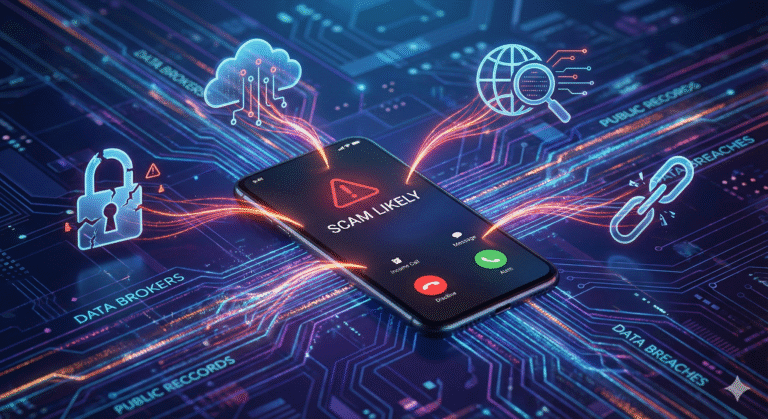
The most common reason is data leakage. Almost every digital service in India asks for a phone number, whether it is food delivery apps, online shopping platforms, job portals, coaching institutes, or local service apps. When these platforms fail to secure their databases properly, phone numbers get exposed. Once leaked, this data is copied, resold, and reused endlessly.
Another major factor is indirect data sharing. Many apps and websites share user data with third-party advertisers and partners under vague privacy policies. A simple action like signing up for a free trial, registering for a webinar, or scanning a QR code at a store can put your number into multiple databases without you realizing it.
A real-life example seen across India is job-related scam calls. In recent years, users who registered on small job portals started receiving fake HR calls offering work-from-home roles. The callers sounded professional and knew basic details, which made the scam convincing. Victims later discovered their numbers were sourced from compromised job databases.
Telecom number recycling also plays a role. When a number is reassigned, scammers may already have it listed from the previous owner.
Scam calls are not random accidents. They are the outcome of weak data protection, poor cybersecurity practices, and uncontrolled data sharing. For Indian businesses, this is a serious reminder that protecting user data is no longer optional. Once personal data leaks, trust is lost, and damage is permanent.
One of the biggest reasons is data breaches. Indian users’ phone numbers often get exposed when apps, websites, or service providers suffer security lapses. Food delivery apps, e-commerce platforms, EdTech portals, and even small local service apps collect phone numbers. When their databases are compromised or poorly secured, this data ends up for sale on underground forums.
Another common source is data sharing without consent. Many apps bundle user data with third-party advertisers or “analytics partners.” Even if you never posted your number online, signing up for a discount, Wi-Fi access, or a contest may quietly pass your details along.
A real-life example: in 2023, several Indian users reported scam calls shortly after registering on lesser known job portals. The pattern was clear fake HR calls offering high-paying roles, followed by demands for “registration fees.” The victims had only shared their number once.
Then there’s number recycling. Telecom operators reassign old numbers. If the previous owner shared it widely, scammers already have it on their lists.
Finally, automated dialers simply brute-force Indian number ranges, especially active series like +91 9XXXXXXXXX.
Scam calls aren’t random. They’re a symptom of weak data protection practices. For businesses, this highlights the urgent need for stronger cybersecurity controls, responsible data handling, and compliance with India’s DPDP Act because once data leaks, control is lost forever.