Remember when watches just told time? Those days are long gone. Today, that sleek band on your wrist knows more about you than your closest friends—and it’s probably sharing those secrets with strangers.
If you’re wearing a fitness tracker or smartwatch right now, we need to talk about what it’s really doing behind those colorful health stats.
When Fitness Data Becomes a National Security Threat
Let me start with a story that should terrify anyone wearing a fitness band.
In November 2017, fitness app Strava published a global heat map visualizing over 1 billion activities from 27 million users worldwide. The colorful visualization showed popular running and cycling routes across the globe. Pretty harmless, right? Wrong.
In January 2018, Australian student Nathan Ruser noticed something alarming: the heat map inadvertently revealed the exact locations and patrol routes of secret U.S. military bases in Afghanistan, Syria, and other conflict zones. Soldiers and contractors jogging around classified facilities had their fitness bands recording every step, creating glowing GPS breadcrumbs that mapped out supposedly hidden installations.
The Pentagon was forced to acknowledge the security breach. Major Adrian Rankine-Galloway stated that the Department of Defense was reviewing its policies on personal devices and GPS usage, emphasizing the need for “situational awareness” when sharing personal information. Major news outlets including The Guardian, NBC News, and NPR extensively covered how this fitness data exposed not just base locations, but also individual service members’ identities and movement patterns at classified sites.
If military-grade operational security can be compromised by a Fitbit, what does that mean for your personal privacy?
Your Wearable is a Walking Surveillance Device
Here’s what most people don’t realize: your fitness tracker isn’t just counting steps. It’s creating an incredibly detailed profile of your entire life.
These devices monitor your GPS location every second, track your heart rate patterns throughout the day, analyze your sleep quality, measure stress levels through skin conductivity, and record detailed workout routines. Combined, this data reveals when you’re home, when you’re traveling, when you’re stressed, and even when you’re being intimate with your partner.
Researchers at the University of Toronto proved something even more disturbing: they could predict users’ passwords with startling accuracy by analyzing hand movements and heart rate changes captured by wearables during typing. Yes, your fitness band can literally watch you enter your banking password.
The Bluetooth Backdoor Nobody Talks About
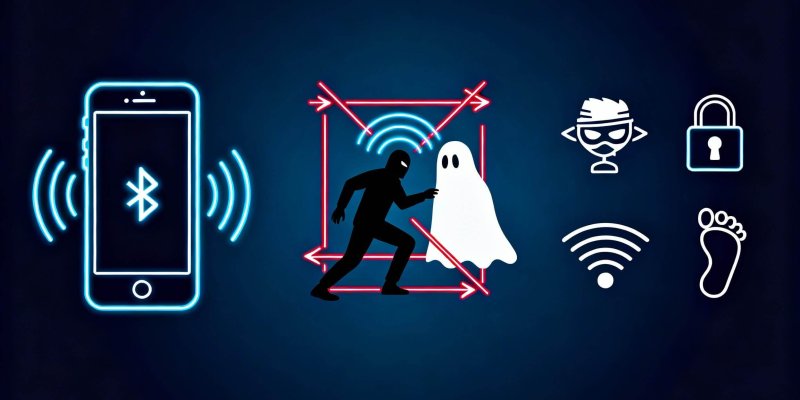
Most fitness bands sync via Bluetooth Low Energy (BLE) for convenience, but convenience and security rarely shake hands. Security researchers have repeatedly demonstrated how easy it is to intercept Bluetooth transmissions from wearables in crowded places like gyms, airports, or coffee shops.
In 2020, cybersecurity experts discovered critical vulnerabilities in popular fitness trackers that allowed attackers within Bluetooth range to inject false health data or extract personal information without any authentication whatsoever. Someone could be sitting next to you on the train, silently harvesting your health metrics or tracking your exact location, and you’d never know.
Your Data is Being Sold While You Sleep
Think your health data stays between you and your device? Think again.
Fitness companies routinely share or sell “anonymized” data to third parties, but anonymization is largely a fiction. Research from 2019 revealed that 95% of Americans could be uniquely re-identified using just four timestamped location points—exactly the kind of data your smartwatch generates constantly throughout the day.
Insurance companies are already partnering with fitness tracker manufacturers, offering premium discounts in exchange for access to your health data. Today it’s voluntary. But as this practice normalizes, how long before it becomes mandatory? Will you be denied coverage or charged higher rates because you refused to be monitored?
How to Protect Yourself Without Ditching Your Device
I’m not saying you need to throw your smartwatch in the trash (though that would certainly solve the problem). But you do need to be smarter about how you use it.
Start by disabling features you don’t actually need—continuous heart rate monitoring, always-on GPS, and automatic activity detection are convenient but unnecessary for most people. Dive into your device’s privacy settings and opt out of every data sharing program you can find. Use airplane mode during sensitive activities or in private locations.
Never sync your wearable on public Wi-Fi without a VPN, and regularly review what apps have access to your fitness data on your phone.
The Bottom Line
Here’s the uncomfortable truth: that fitness tracker monitoring your health is simultaneously monitoring everything else about your life. Every step, every heartbeat, every location creates a permanent digital record that could end up anywhere.
Before you strap on that smartwatch tomorrow morning, ask yourself: is knowing your exact step count really worth creating a lifetime surveillance record of your most intimate moments?
Your health data isn’t just sensitive—it’s the most personal information you have. In an age where data is the new oil, your wrist is an oil well, and someone else is profiting from it.
Stay secure out there.